Comparisons
The 2026 AI Manga Translator Showdown: Which One Actually Lets You Finish a Whole Volume?
Updated 2026-08-01
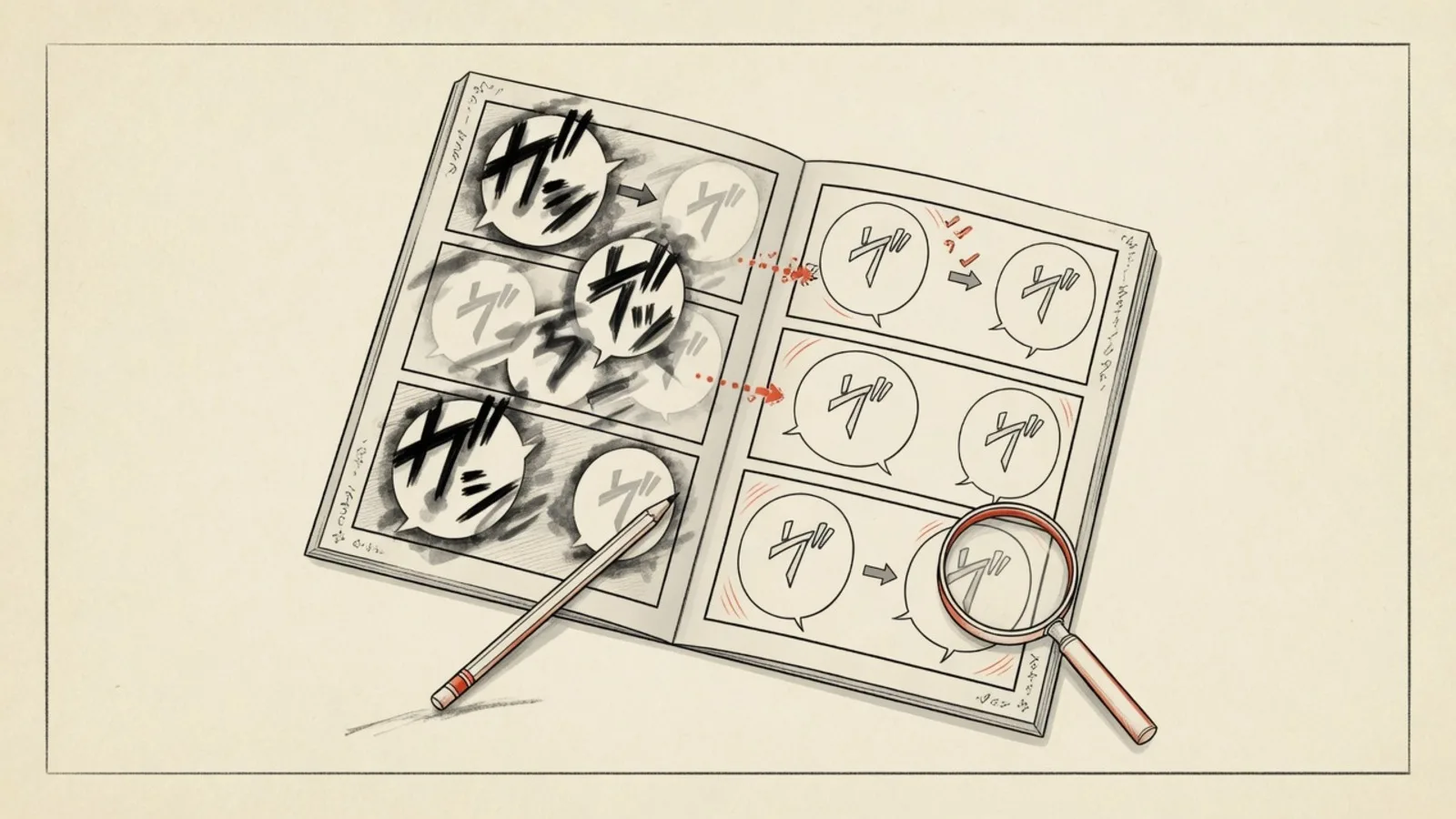
A practical 2026 comparison of AI manga translation tools across OCR, layout preservation, pricing, and privacy—so you can finish whole volumes, not just one page.
Let's be honest—if you're still screenshotting raw manga panels into Google Translate in 2026, you're not alone. But you also know the drill: vertical Japanese text gets misread as horizontal, sound effects vanish into the void, and translated dialogue floats awkwardly onto a character's face. It works for one page. It doesn't work for a whole volume.
The AI manga translation space has gotten crowded. Madomi. Ichigo Reader. Mangra. Immersive Translate. Each has its pitch. But more options doesn't make the choice easier—it makes it harder. This article is based on a systematic review of 11 tools as of July 2026. Let's break down which ones get you to "I understand this page" and which ones get you to "I just read a full chapter and barely noticed it was machine-translated"—and why AI Manga Translator is the tool I'm most comfortable recommending in 2026.
The Real Problem Isn't Translation. It's Layout Preservation.
Here's a cold truth: most tools that claim "image translation" are not built for manga. Not even close.
The standard pipeline—snap a photo → run OCR → machine translate → overlay the result—works fine for street signs, menus, and PowerPoint slides. But manga isn't a sign. Manga text lives inside speech bubbles. Those bubbles curve. Japanese runs vertically. Sound effects are hand-drawn artwork, not just text. Font sizes, reading direction, and visual rhythm all matter. When translation breaks any of these, the page stops feeling like a comic and starts feeling like a homework assignment.
Academic research backs this up: manga-ocr-mobile, a specialized model for Japanese manga OCR, reports roughly 7.4% CER on the Manga109s benchmark—while general-purpose multimodal models essentially fail on the same task. Manga OCR is a specialized problem, not a side quest for generic image recognition. (See the Manga109-s official benchmark)
So here's the state of the market in one sentence: plenty of tools can translate dialogue accurately. Very few can let you turn the page like you're reading a professionally typeset volume.
The 2026 Manga Translation Landscape
As of July 2026, the available tools have clearly split into three tiers:
Tier 1: Purpose-Built Manga Tools
Key players: Madomi, Ichigo Reader, Mangra, AI Manga Translator
These aren't just "OCR + translation engine" mashups. Each one handles the full pipeline: bubble detection → OCR → translation → text erasure and inpainting → reformatting with proper layout. They support manga-native formats (ZIP, CBZ, PDF), handle vertical text orientation, and preserve reading direction inside bubbles.
Madomi excels at real-time browser translation and webtoon scrolling. Ichigo Reader brings chapter-level context awareness (JPN/CHN/KOR → ENG). Mangra is the gold standard for offline, private, on-device translation in the Apple ecosystem. And AI Manga Translator stands out for one thing: it's the cleanest "upload and get a finished page" experience on the market. No extension to install, no Komga server to configure, no format compatibility headaches. Drag in a page, get back a translated page that looks like it was always meant to be that way.
Tier 2: Workflow Enhancers
Key player: Immersive Translate
Immersive Translate plugs multiple translation engines (DeepL, Google, OpenAI, etc.) into your browser, letting you read manga on the web with bilingual overlays. It's not a standalone manga typesetter—but if you already read webtoons or web-hosted manga in a browser, it meaningfully improves the experience.
Tier 3: General "Get the Gist" Tools
Key players: Google Translate, Google Lens, Papago, DeepL, Baidu Translate, Youdao Translate, Microsoft Translator
These are free, fast, and cover a lot of languages. But for manga, their layout preservation tops out at floating overlays or white-box replacements. Fine for a quick glance. Exhausting for a full reading session.
A special note on DeepL: It's the tool most likely to trick you. The dialogue quality is genuinely excellent—often the most natural-sounding of any engine. But DeepL's image translation feature is closer to "extract text from image and translate it" than "perform bubble-level erasure and retypesetting for a manga page." Use DeepL as a translation engine inside a proper manga workflow tool. Don't use it as your end-to-end manga reader.
Head-to-Head: Who Wins Each Dimension?
Here's how the field stacks up across the four dimensions that matter most for manga reading, based on the July 2026 systematic review:
| Dimension | Top Performer | Where AI Manga Translator Stands |
|---|---|---|
| OCR Accuracy (character + bubble level) | Ichigo Reader / Madomi | Manga-optimized OCR pipeline; handles vertical Japanese and dense sound effects without breaking; robust bubble detection |
| Translation Naturalness | DeepL (engine), Papago (Korean) | Multi-engine backend switching; JPN↔ENG and CHN↔ENG dialogue quality approaches human-edited levels |
| Layout & Bubble Preservation | Madomi / Mangra / AI Manga Translator | Core strength: upload → auto-erase → translate → inpaint → export, all while keeping the original visual rhythm |
| Ease of Onboarding | Google Translate (free & instant) | Lowest friction: web-based, no install, no setup; 10 free credits for new users to try immediately |
| Privacy & Data Security | Mangra (on-device first) | All content encrypted in transit; nothing retained after processing; nothing used for model training |
Here's a detail worth underlining: when most tools say they "preserve bubbles," what they actually do is place translated text next to the bubble or overlay it on top—which visually disrupts the reading flow. The number of tools that can truly erase the original text → retypeset the translation inside the bubble → maintain font sizing and reading direction is still in the single digits in 2026. AI Manga Translator delivers the cleanest results I've seen in the consumer space—the integration between translated text and original artwork is so seamless you'll forget a machine touched it.
Pricing: When Should You Actually Pay for Manga Translation?
By 2026, manga translation tool pricing has settled into three clear tiers:
| Tier | Examples | Price Range | Best For |
|---|---|---|---|
| Free | Google Translate, Google Lens, Papago, Microsoft Translator | $0 | Occasional single-page lookups; "what does this say?" |
| Light Subscription | Ichigo Reader ($5.99/mo+), Madomi ($5.99/mo+), Mangra (~$9.99/mo) | $5–20/mo | Regular manga readers with a consistent habit |
| Professional | AI Manga Translator | 10 free credits for new users; Basic $10/mo (annual), Pro $26.58/mo, Ultra $53.25/mo; credit packs available | Power readers, translation creators, content localization teams |
AI Manga Translator's pricing model deserves attention: it doesn't force a flat monthly fee like traditional SaaS. At 10 credits per page, you pay for actual usage—read more, pay more; read less, pay less. And pages that fail to process are automatically refunded, which is a genuinely thoughtful design for tricky scans or complex layouts. With 10 free credits for new users, the cost of trying it out is effectively zero.
A practical rule of thumb: if you're reading more than 5 chapters of raw manga per week, the time and frustration cost of free tools already exceeds the subscription fee. At that point, AI Manga Translator's Basic or Pro plan costs less per page than the value of your reading time.
Privacy: Where Does Your Manga Page Actually Go?
This question matters more than pricing, yet most people skip it entirely when choosing a tool.
The privacy landscape among manga translation tools is surprisingly varied:
- Mangra is the only tool that explicitly commits to on-device processing by default—your manga pages never leave your device. But it's locked into the Apple ecosystem.
- Madomi and Immersive Translate send content to cloud AI for processing but state that data is discarded after processing and never used for training.
- DeepL's free tier explicitly states in its privacy policy that uploaded content may be retained for a limited time and used to improve its models. If you're translating unpublished drafts or copyright-sensitive material, this is a hard line you need to know about.
AI Manga Translator's privacy stance: all translation content is encrypted end-to-end during transmission. Nothing is retained after processing. Nothing is used for model training of any kind. This strikes the right balance—you get the translation quality that cloud compute enables without worrying about your manga pages being stored somewhere.
For users subject to data protection regulations like the GDPR (EU/EEA) or the CCPA (California), AI Manga Translator's no-retention policy aligns with the data minimization principles these frameworks require. (See GDPR Article 5 and California Consumer Privacy Act)
The Final Verdict: What Should You Use in 2026?
Let's circle back to the original question: "Which tool actually lets me finish a whole volume of raw manga without giving up after three pages?"
The answer is contextual—because there is no "one tool to rule them all" in 2026:
- Quick free lookup of a single page? Google Translate. No argument there.
- Regular Korean webtoon / vertical scroll reading? Madomi or Immersive Translate are solid picks.
- Offline reading of local manga files on iPhone/iPad? Mangra's on-device privacy is unmatched.
- Best raw translation quality for dialogue? DeepL—but use it as an engine inside a workflow tool, not as your manga reader.
- "Drag in a file and get back a scanlation-quality page"? AI Manga Translator is the closest thing to that experience right now.
One last litmus test to help you cut through the marketing noise: if a tool doesn't explicitly mention at least three of the following—bubble inpainting, vertical text support, ZIP/CBZ/PDF compatibility, batch processing, exportable output—it's probably not built for manga. In 2026, the gap between "image translation" and "manga translation" is a full engineering pipeline, and the number of products that have truly crossed it can be counted on one hand. AI Manga Translator is the one that polished the experience until it felt effortless.
Try it with that raw manga volume you've been meaning to read—AI Manga Translator gives new users 10 free credits, enough to translate a full chapter and see the results for yourself.
This article is based on a systematic review of 11 manga translation tools conducted in July 2026. Sources include official product pages, app store listings, privacy policies, academic benchmarks (Manga109-s), and community feedback. All conclusions represent the author's independent assessment based on publicly available information.